
Design for Real People.
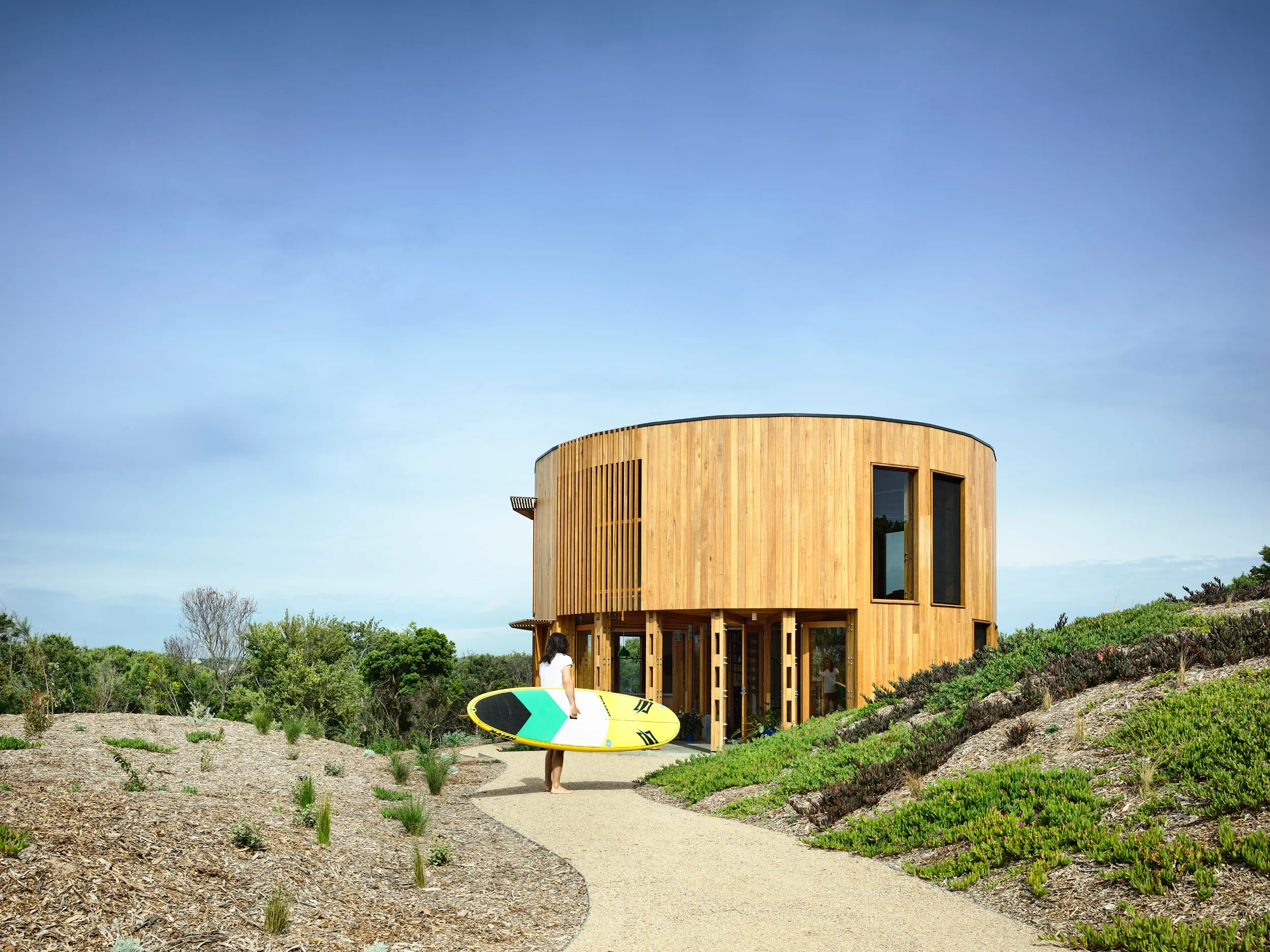
FOR OVER TWO DECADES, THE WORD “PLAYFUL” HAS BEEN USED TO DESCRIBE AUSTIN MAYNARD ARCHITECTS.
In the design industry, "Serious Architecture" is often equated with the safe, the linear and the monochrome. This approach is paralysed by the fear of producing a controversial response, resulting in spaces that produce no response at all. For 24 years, our portfolio has challenged this risk-aversion - using colour, texture, unexpected layouts, and scale to introduce joy, and to reflect the uniqueness of our clients and communities. We are celebrated as 'the playful architects' simply because we refuse to strip colour and inventiveness out of the equation. Our work is “serious architecture” – but it may come with a splash of yellow.
What people deem "playful" is actually design for sensory engagement. Our work is about putting people and their emotions above all else. We prioritise how a space feels over how it photographs, understanding that the sunny spot where the cat chooses to sleep is a far more powerful architectural driver than a showroom-ready dining room. AM.A has a point of view, one centred on engaging with and enjoying the everyday. That is why it is ‘Architecture for a Good Life.’
Neurodiversity and Sensory Regulation
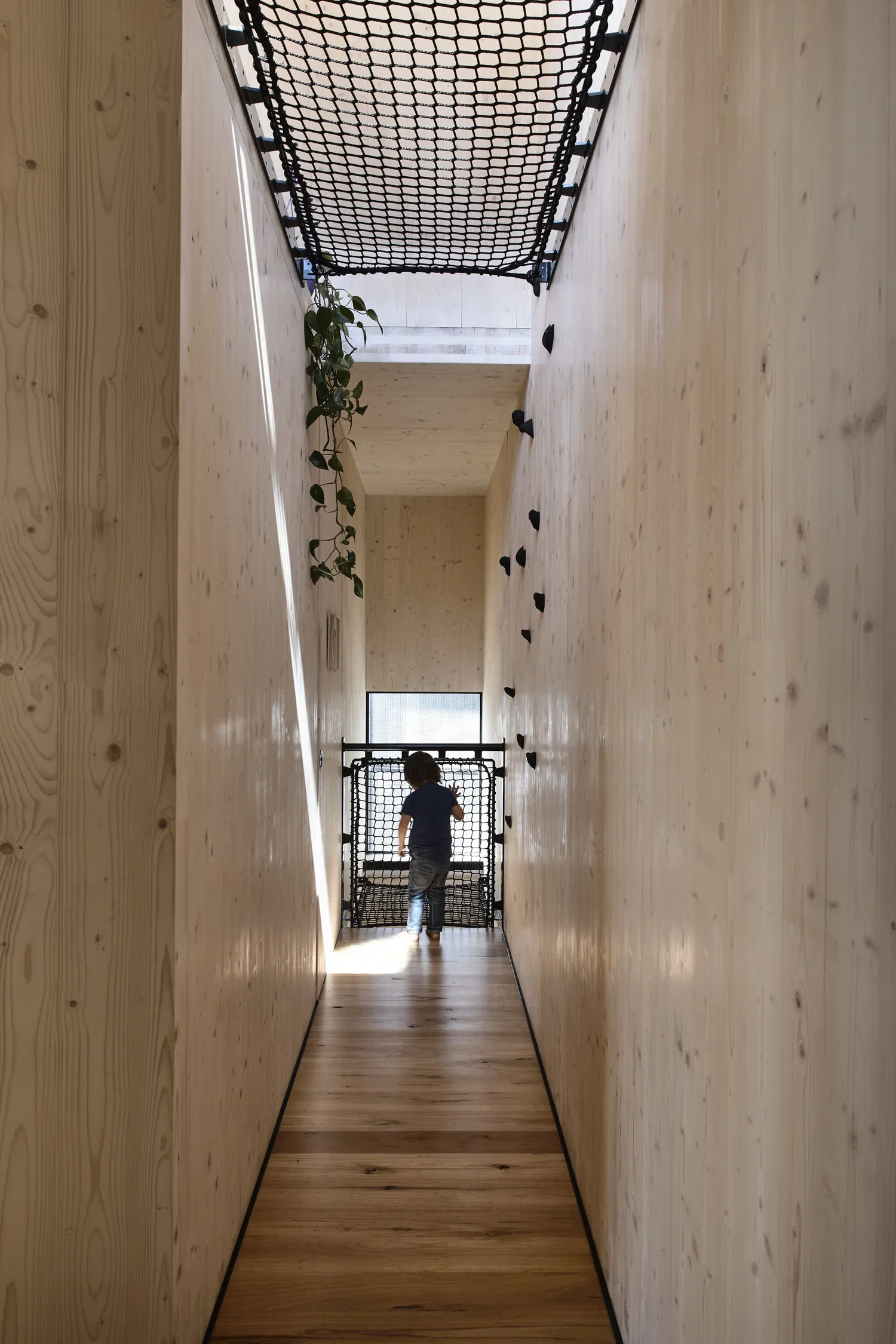
Human brains, particularly the fifteen to twenty per cent of the population who are neurodivergent, experience the built environment profoundly. Traditional architecture causes cognitive fatigue and sensory overwhelm. At AM.A, we know how to design places that provides spatial agency instead. Our projects offer alternate routing, cognitive load reduction, and clear sensory zoning. We break down monolithic volumes into human-scale villages to reduce psychological friction, ensuring there are always safe, quiet places to retreat and decompress. This is democratic, compassionate design that hands environmental control back to the individual.
Union House: Multiple pathways like ramps and cargo nets give people a choice in how they physically navigate and ground themselves in the space.
Clarke: A dedicated, hidden secret room that acts as a sanctuary where kids can completely unmask.
That House: Operable louvres and sliding walls allow residents to precisely control their exposure to external light, sound, and views.
Social Connection
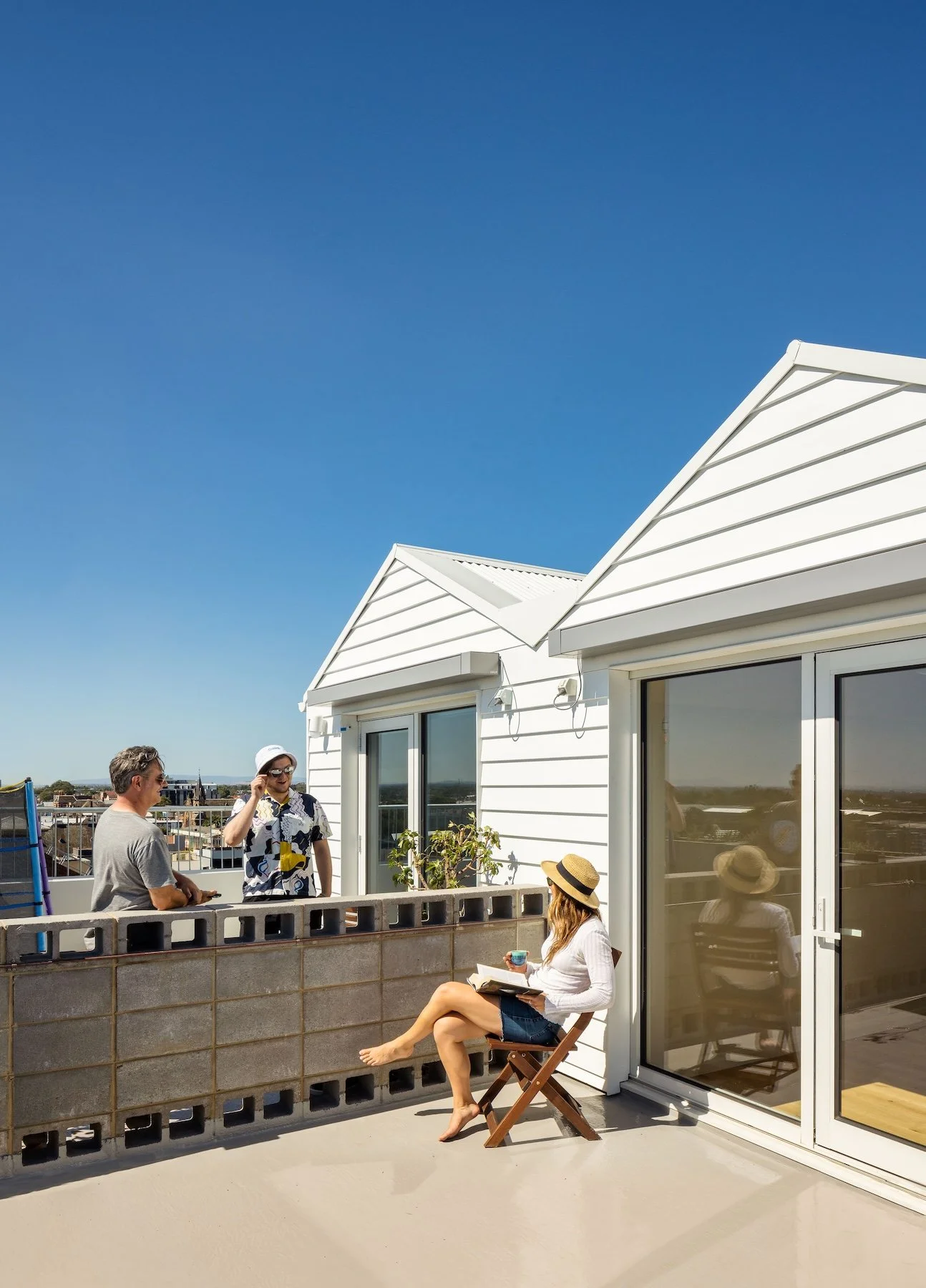
Traditional development often creates rigid boundaries that isolate people. We do the opposite. Whether designing a single-family home, a multi-residential community or a public precinct, we design for spontaneous human interaction. By scaling up the concept of the shared living room, we create inclusive places that encourage community and combat urban loneliness. Injecting joy, colour, and tactile engagement into our shared environments lowers baseline anxiety and builds social equity. We use architecture to bring people together, creating vibrant neighbourhoods that actively foster a sense of belonging.
ParkLife: Features a communal rooftop amphitheatre and open walkways that turn shared spaces into active, joyful social hubs.
Terrace House: Replaces sterile, closed apartment corridors with highly tactile, external common areas that encourage spontaneous connection.
Adaptability
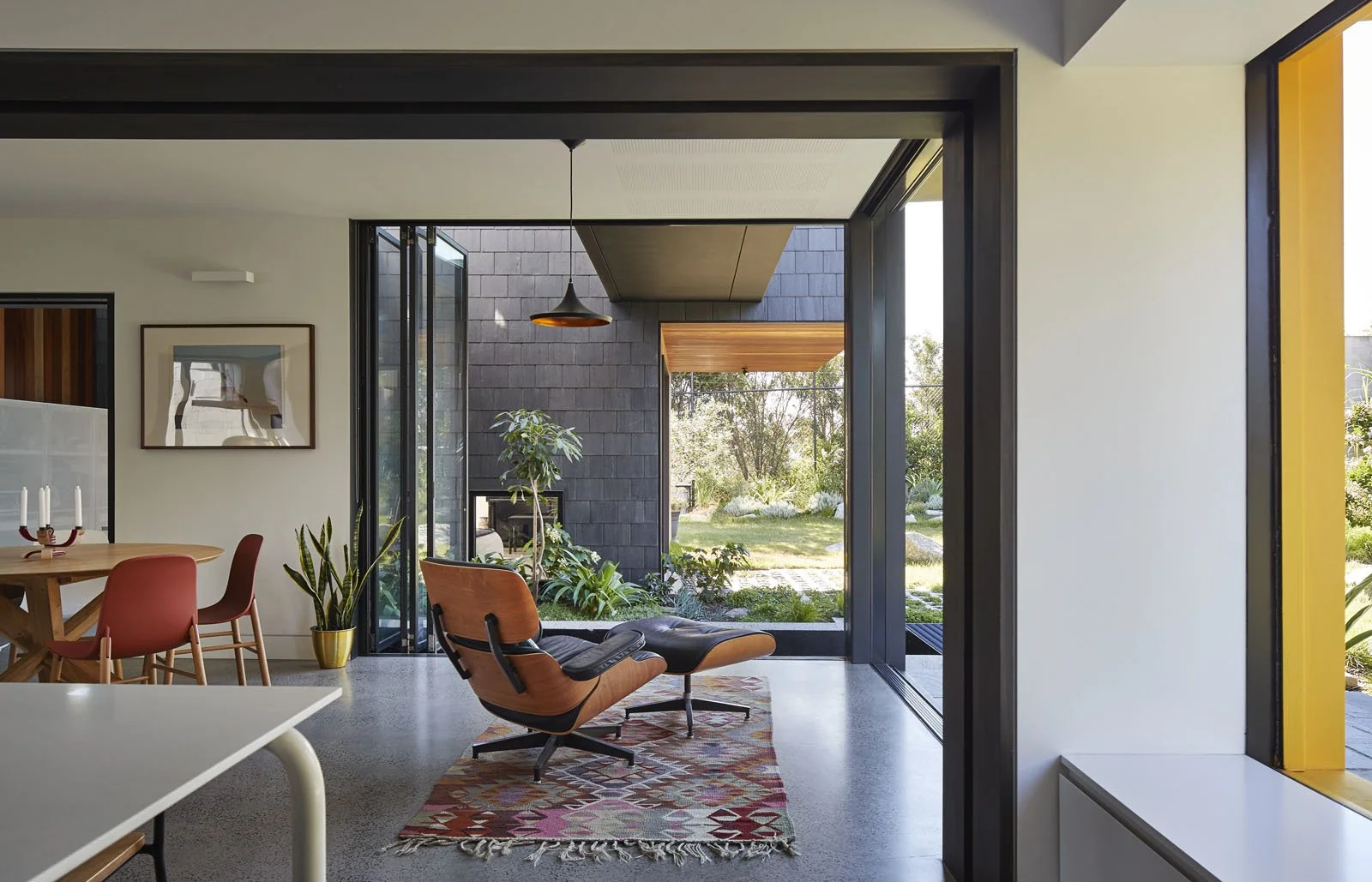
True sustainability is about creating architecture that stands the test of time, and can adapt based on the people who live within it. We ensure our buildings evolve as a family ages or changes over decades through highly flexible layouts, durable, low-maintenance materials, smart zoning, and multipurpose spaces. This eliminates the emotional and environmental cost of demolition and constant renovation, creating enduring structures that are loved, maintained, and lived in for generations.
Charles House: Designed with multi-generational zoning that allows the layout to adapt as the family’s physical and sensory needs change over thirty years.
My-House: Built with a highly flexible, open layout that serves as a home, an office, and a long-term residence that can easily reconfigure as life stages shift.
Austin Maynard Architects acknowledges Aboriginal and Torres Strait Islander peoples as the traditional custodians of country throughout Australia. We pay our respects to Elders past, present and emerging, and support the long overdue need for recognition and empowerment.